When it's time to sell your car, one of the first decisions you'll face is how to sell it: privately to another person, or to a dealer (including instant online car-buying services). Both options get the car sold, but they can leave very different amounts of money in your bank account.
There is no single right answer. The decision depends on how much time you have, how much effort you are willing to put in, and how well you can prove your car's true condition.
Here is an honest breakdown comparing both routes.
1. Selling to a Dealer: Speed and Ease for a Price
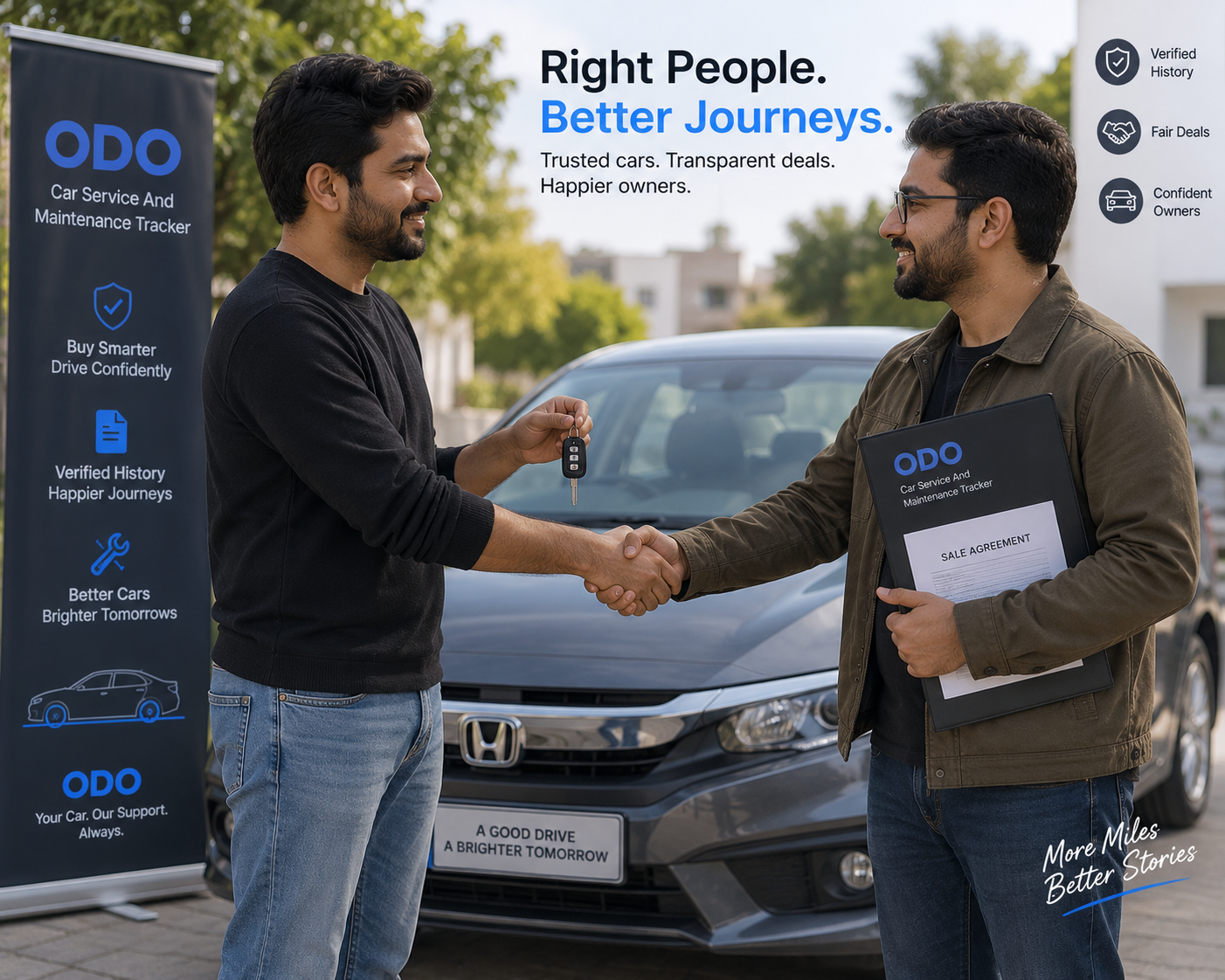
Selling to a dealer or an instant-buying platform is the convenience route. You bring the car in, get an inspection, receive an offer, and often finalize the payout the exact same day.
- Speed & Convenience: No creating online listings, no managing calls, and no meeting strangers.
- Streamlined Transfer: The dealership manages the majority of the title transfer and legal paperwork.
- The Trade-Off: Dealers must resell your car to make a profit margin, so their offer is strictly wholesale — always lower than what the vehicle can fetch privately.
2. Selling Privately: Maximum Returns, Greater Effort
Selling directly to another individual yields a higher payout because there is no middleman taking a cut of the transaction. However, capturing that extra margin asks more of you.
- Maximum Financial Return: You retain the full retail market value of your vehicle.
- Increased Effort: You handle taking photos, creating listings, filtering inquiries, managing test drives, and transferring registration documents.
- Managing Buyers: Prospective buyers will scrutinize the car, negotiate aggressively, and demand proof of maintenance.
Build Buyers' Trust Instantly
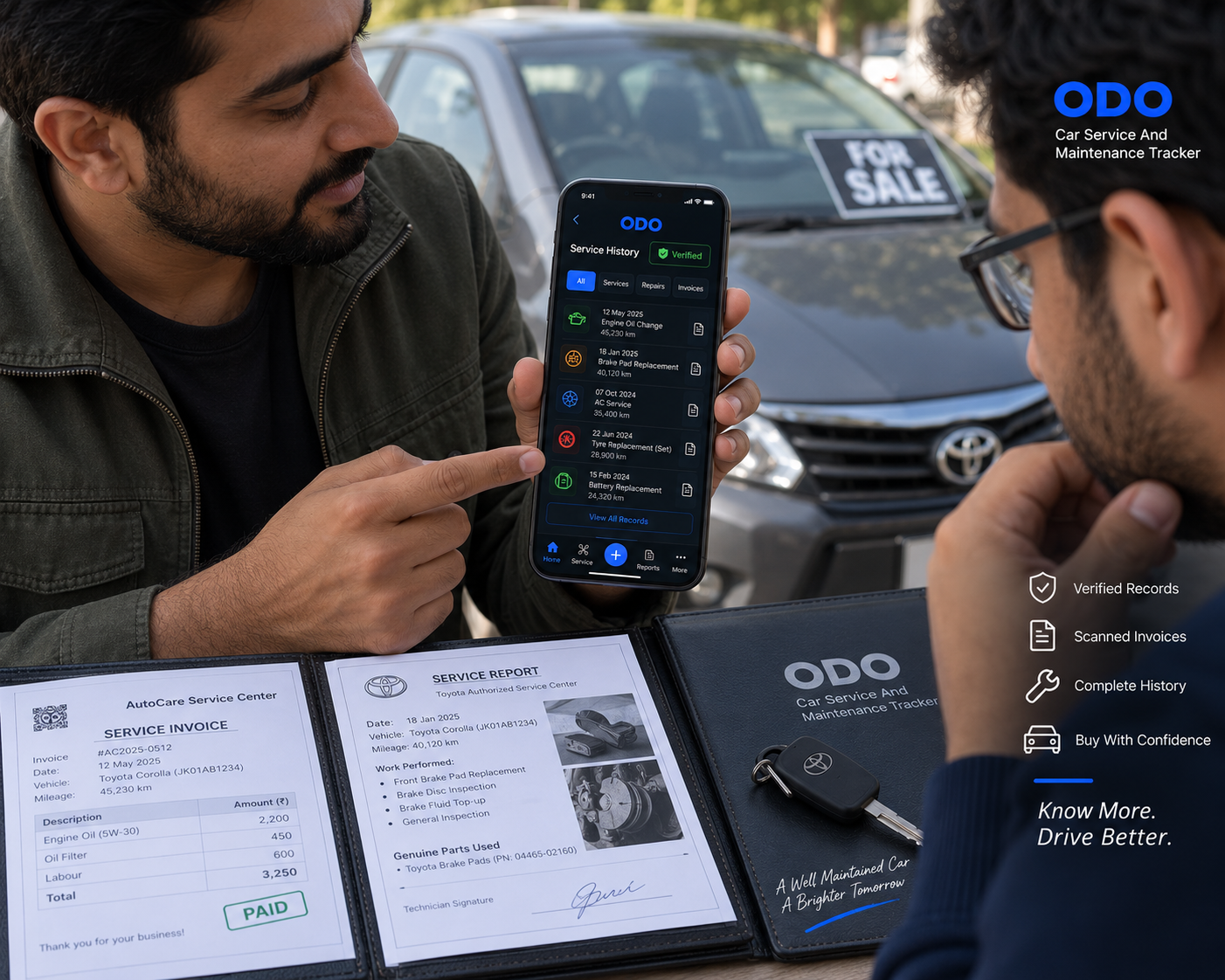
Share your vehicle's complete digital service history, scanned repair bills, and verified document status with Odo.
Private Sale vs. Dealer Trade-In Comparison
- Price Obtained: Private sales yield 10%–20% higher returns; dealer trade-ins yield wholesale value.
- Sale Timeline: Private sales take days to weeks; dealer sales take 1 to 2 days.
- Paperwork: Private sales require manual transfer tracking; dealers handle all paperwork.
- Negotiation: Private sales involve heavy negotiation; dealer sales offer fixed, non-negotiable pricing.
3. The Secret to Maximizing Private Sale Price
The reason private buyers bargain hard comes down to uncertainty. When buyers can't verify how a car was maintained or whether an odometer is authentic, they assume the worst and drop their offer to protect themselves against hidden repairs.
The primary obstacle to a high-value private sale isn't effort — it is proof.
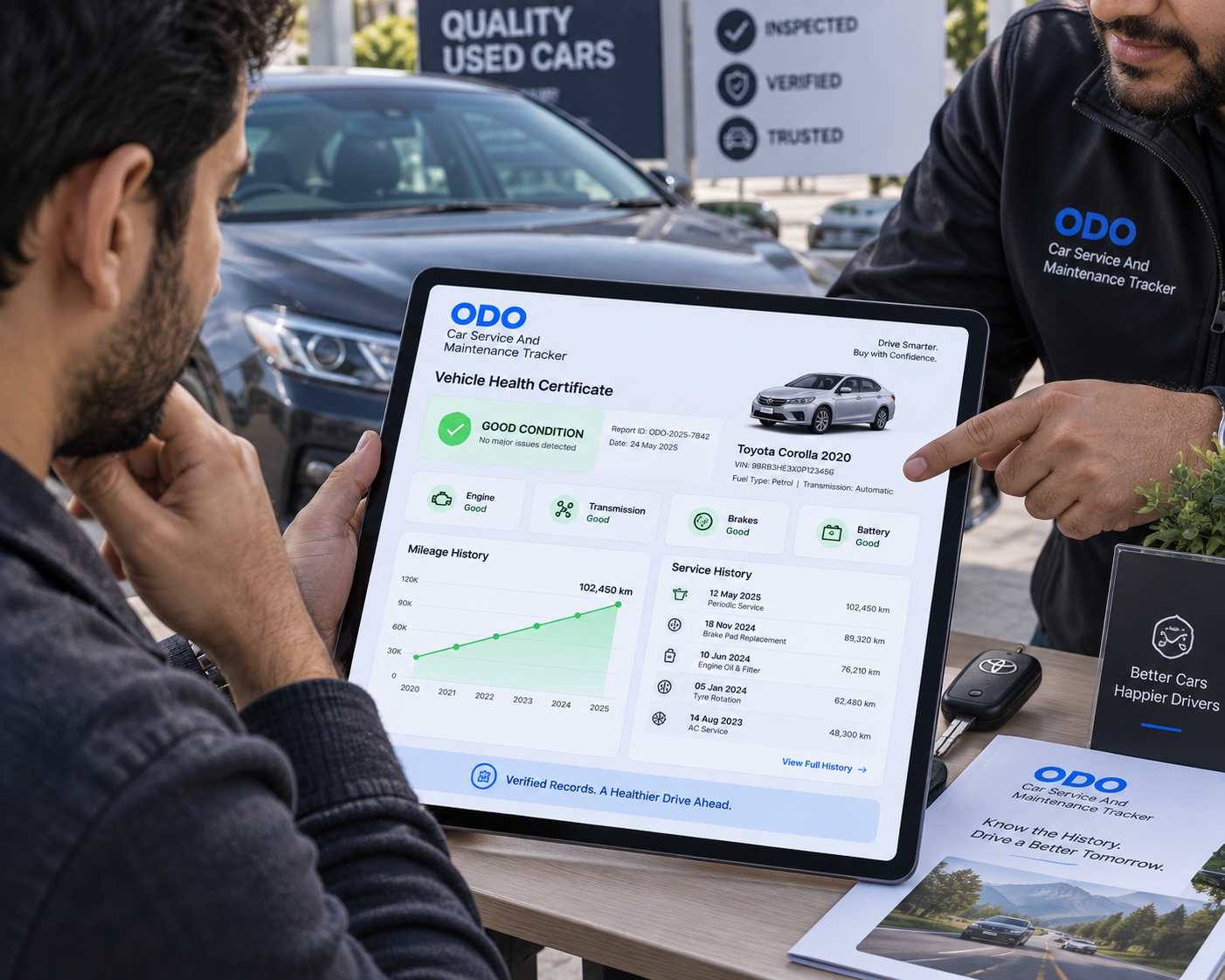
Presenting a complete digital service trail, itemized repair bills, valid compliance papers, and verified odometer logs removes buyer hesitation. A confident buyer negotiates less and pays top market value.
4. Making Your Choice
Choose a dealer if:
- You need immediate cash or want to sell within 24 hours.
- You prefer to avoid managing listings, calls, and test drives.
- You are comfortable accepting a lower wholesale payout for convenience.
Sell privately if:
- You want to capture 100% of your car's retail market value.
- You are willing to spend a few days managing inquiries and test drives.
- You have a documented maintenance history to prove your asking price.
Prepare Your Car for Sale
Maintain a complete digital history of your car's service logs, fuel tracking, and document validity using Odo.
The Bottom Line
Dealers offer speed; private sales deliver maximum returns. The gap between these two options narrows dramatically when you can verify your car's care. A well-documented car sells privately for a strong price without tedious negotiation, making a private sale the optimal path for owners with verified service histories.