You glance at your car's digital display (MID) and feel a wave of relief seeing a promising 18 km/l. But when you look at your wallet at the end of the month, your petrol expenses tell a completely different story. Why does your actual fuel cost never match the optimistic number displayed on your dashboard? The truth is simple: your car's computer isn't measuring fuel—it's estimating it.
Car Dashboard Mileage Display vs Real Efficiency
Close-up shot of a digital car dashboard showing fuel economy reading and low fuel indicator.
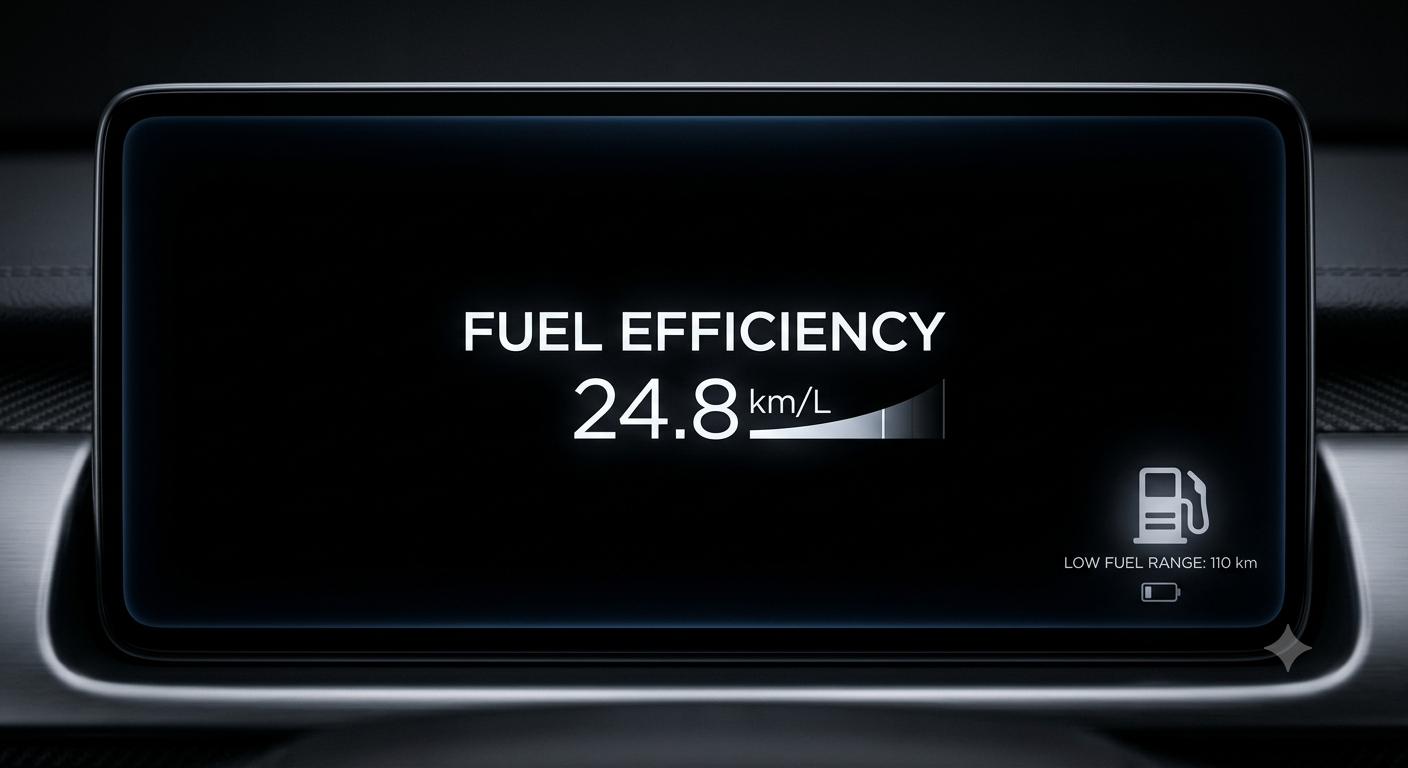
1. Why Your Dashboard Display Is "Lying"
Most modern vehicles estimate fuel efficiency using software algorithms rather than measuring actual fuel flow from the tank. Here is why those numbers are often off by 5% to 15%:
Injection Estimations: The engine control unit (ECU) calculates mileage by measuring how long fuel injectors stay open, not the physical volume of fuel consumed.
Idling & Traffic Delays: Dashboard readings often struggle to account accurately for prolonged idling in traffic jams or sudden aggressive acceleration spikes.
Tire Size Modifications: Changing tire sizes or driving with incorrect tire pressure alterswheel rotation counts, skewing the odometer readings that the ECU uses for its calculations.
2. The Gold Standard: How to Calculate Real Mileage (The Full-Tank Method)
To get the exact, unvarnished truth about your car’s fuel efficiency, follow the step-by-step Tank-to-Tank Method:
Fill Up to Auto-Cut: Visit a fuel station and fill your tank until the nozzle automatically cuts off. Do not force extra fuel in.
Reset Your Trip Meter: Set your Trip A meter to 0 before driving away.
Drive Normally: Use your car as you normally would for a few days until the tank drops to around a quarter full.
3. The Simple Mileage Math
To find your real mileage, divide the kilometers driven by the liters filled:
Example: If you drove 420 kilometers and filled 30 liters of fuel, your real mileage is 14 km/l ($420 \div 30 = 14$).
If your dashboard was displaying 16.5 km/l, your real-world efficiency is actually 14 km/l—a significant gap that impacts your monthly budget!
Automate Mileage Tracking with Odo
Skip the manual math! Log your odometer reading and fuel receipts in the Odo App to calculate real mileage automatically and track monthly fuel expenses.
Calculating Fuel Mileage with Tank to Tank Method
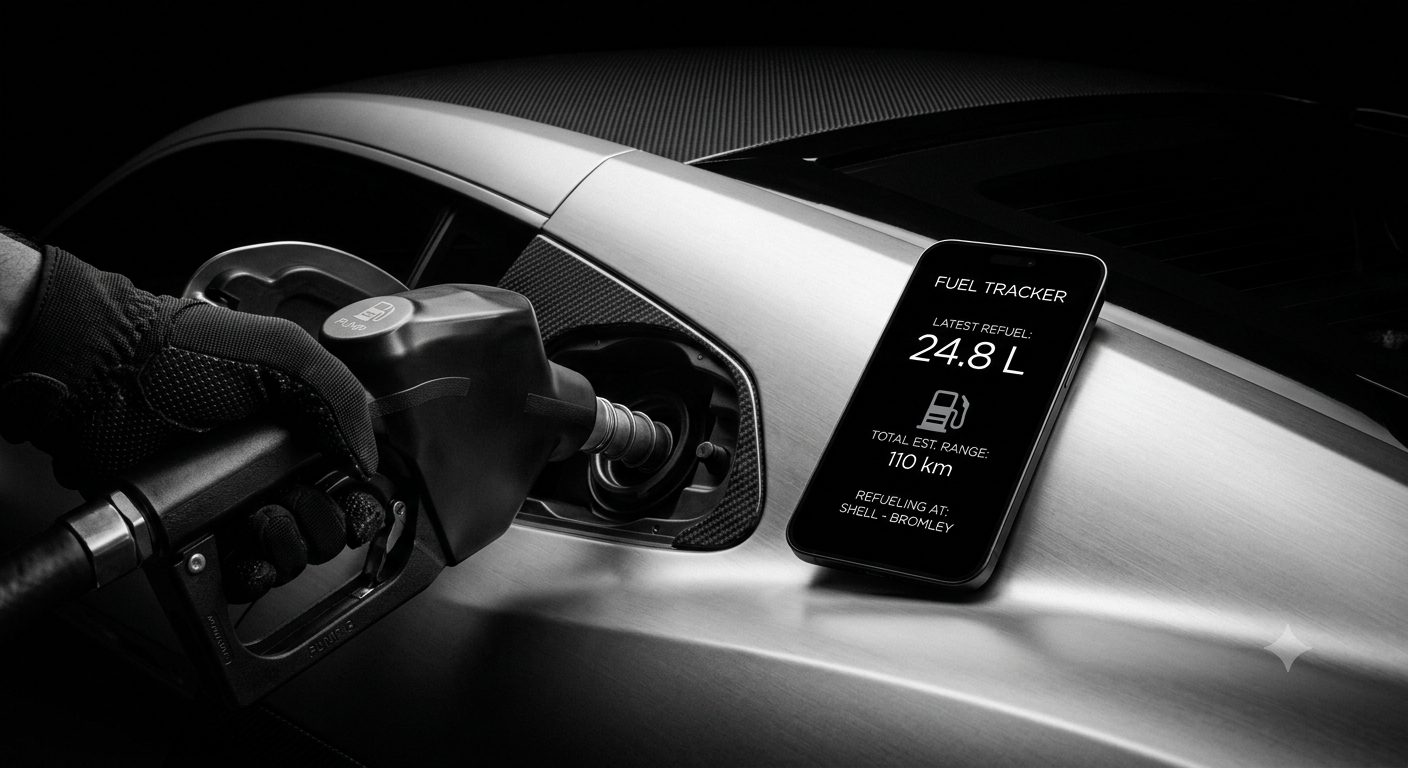
A car owner refueling at a petrol station while using a mobile phone to log fuel details.
4. Factors That Stealthily Drain Your Fuel
Under-Inflated Tires: Low tire pressure increases rolling resistance, reducing efficiency by up to 10%.
Aggressive Driving: Rapid acceleration and hard braking burn fuel significantly faster than smooth cruising.
Excessive Weight: Carrying unnecessary gear in the trunk forces the engine to work harder.
Excessive Weight: Carrying unnecessary gear in the trunk forces the engine to work harder.
Dirty Air Filters: Clogged air filters restrict airflow to the engine, causing inefficient combustion.
Track Fuel Expenses & Mileage History
Store all your fuel bills digitally, spot mileage drops early, and get insights into your true cost-per-kilometer using the Odo App.
5. Dashboard Display vs. Real Calculation
Accuracy Level: Dashboard displays are often 5% to 15% too optimistic. A physical calculation gives you 99% real-world accuracy.
Measurement Method: Dashboards use software estimates. Physical calculation uses the exact fuel volume pumped into your tank.
Traffic & Idling: Dashboards often miss extended idling time. Physical calculation accounts for every drop of fuel burned in traffic jams.
Best Usage: Use dashboard numbers for quick driving hints, but use real calculations for monthly financial budgeting and tracking vehicle health.
Track Fuel Expenses & Mileage History
Save all your fuel bills digitally, catch mileage drops early, and track your true cost-per-kilometer using the Odo App.