Buying a used car feels great — right up until the questions start. When was the last service actually done? What's the real condition of the brakes, the battery, or the tyres? Has the timing belt ever been changed? When is the insurance due?
You own the car now, but you have inherited a complete blank where its history should be. And that blank quietly costs you money.

1. The Problem: You Inherit a Car, But Not Its Story
When you buy a pre-owned vehicle, you get the keys, the registration papers, and a machine with years of unrecorded usage. The previous owner might have maintained it meticulously — or ignored every warning light for three years. You have no way to know for sure.
This missing history creates real, expensive uncertainty:
Unknown Service Intervals: Was the last oil change 2,000 km ago or 12,000 km? You are forced to guess, which leads to servicing too early (wasting money) or too late (risking mechanical damage).
Uncertain Component Lifespans: Wear-and-tear parts like brake pads, batteries, timing belts, and tyres all have finite lifespans. Without records, you cannot tell what is fresh and what is about to fail.
Overlooked Expiration Dates: The insurance policy and Pollution Under Control (PUC) certificate you inherited have expiration dates that are easy to miss — leading to potential fines or coverage gaps.
Inherited Blind Spots: Any maintenance neglected by the previous owner silently turns into your sudden repair bill.
2. Why "I'll Just Figure It Out Later" Backfires
Most buyers handle this uncertainty by doing nothing — driving and hoping for the best. However, missing history never resolves itself naturally.
Without records, every garage visit remains a guess, every warning light is an expensive mystery, and every document deadline becomes a surprise. When you eventually decide to sell the vehicle, you face the exact same problem: no verifiable history to show, leaving buyers suspicious and negotiating your asking price down.
Start Your Car's Digital File
End the guessing game by logging your current odometer reading, service history, and document dates in Odo.
3. The Fix: Establish a Clean Record From Day One
You cannot recover past history that wasn't recorded, but you can stop the cycle of uncertainty today by starting a complete record from the moment the vehicle becomes yours.
Taking control of your used car's history allows you to:
- Log Baseline Metrics: Record current odometer readings, fluid states, and known repairs immediately.
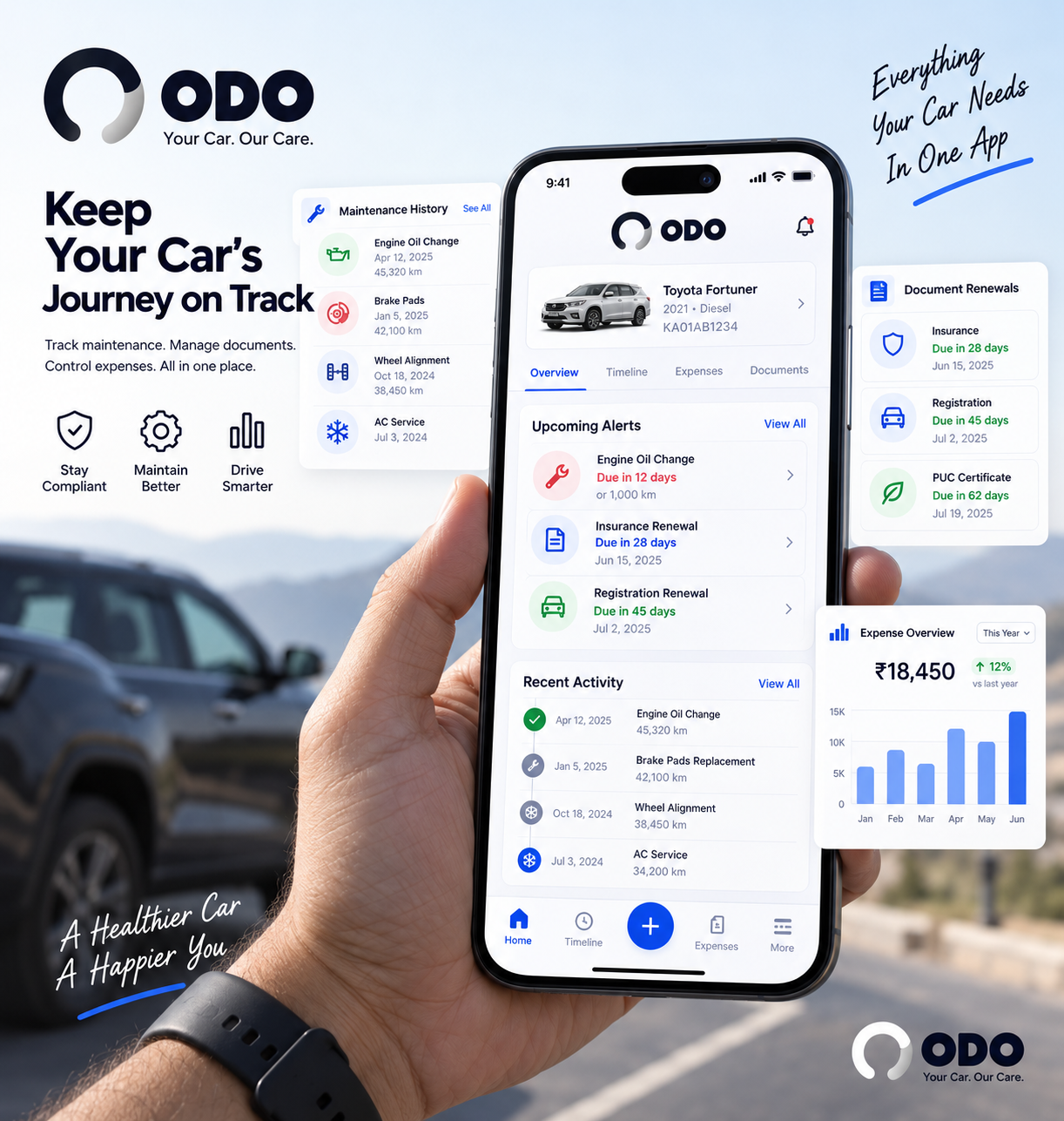
- Set Up Automated Reminders: Log maintenance items so you get timely alerts when the next oil change or filter replacement is genuinely due.
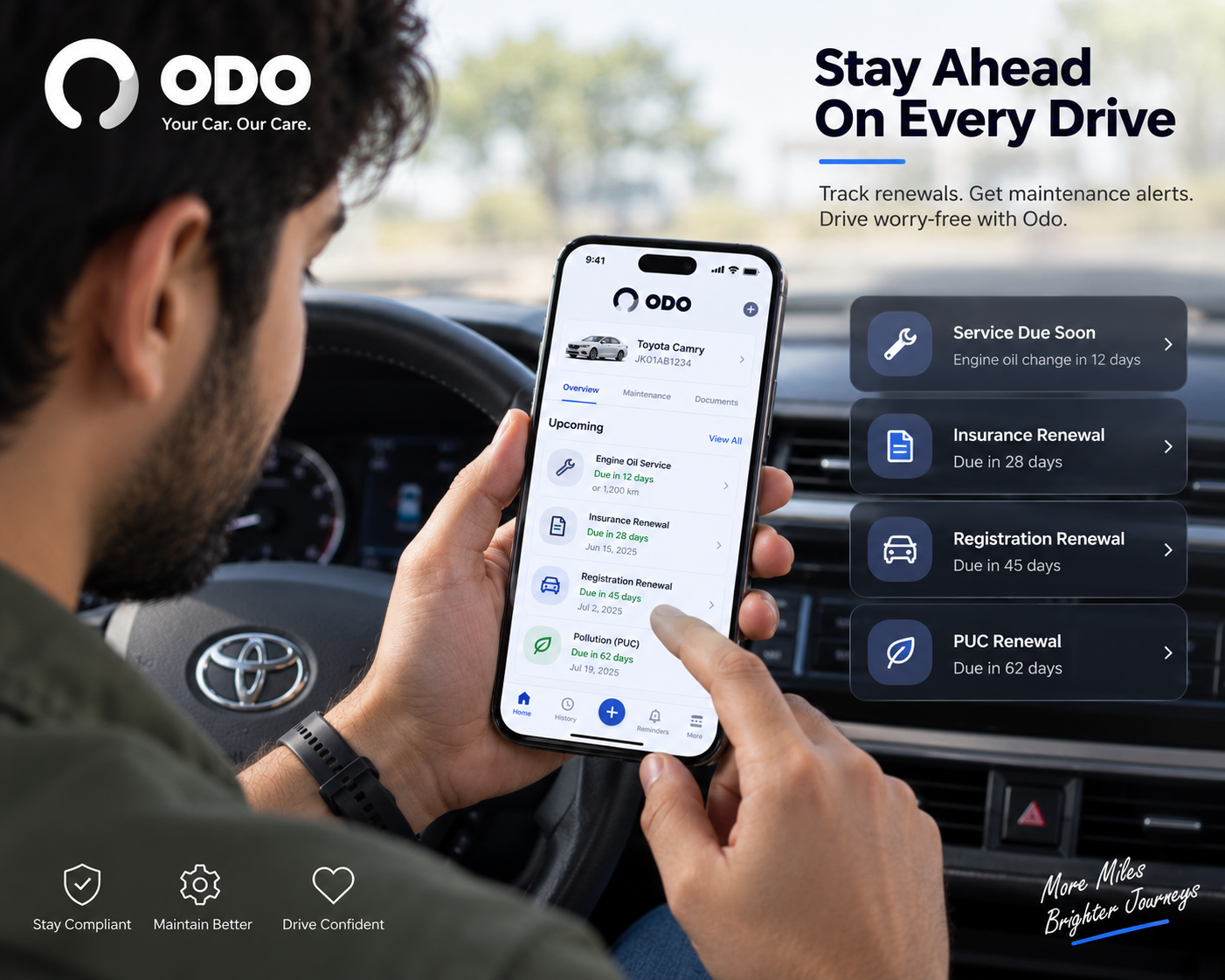
- Track Inherited Documents: Upload motor insurance, registration certificates (RC), and PUC details to receive expiration alerts well before deadlines.
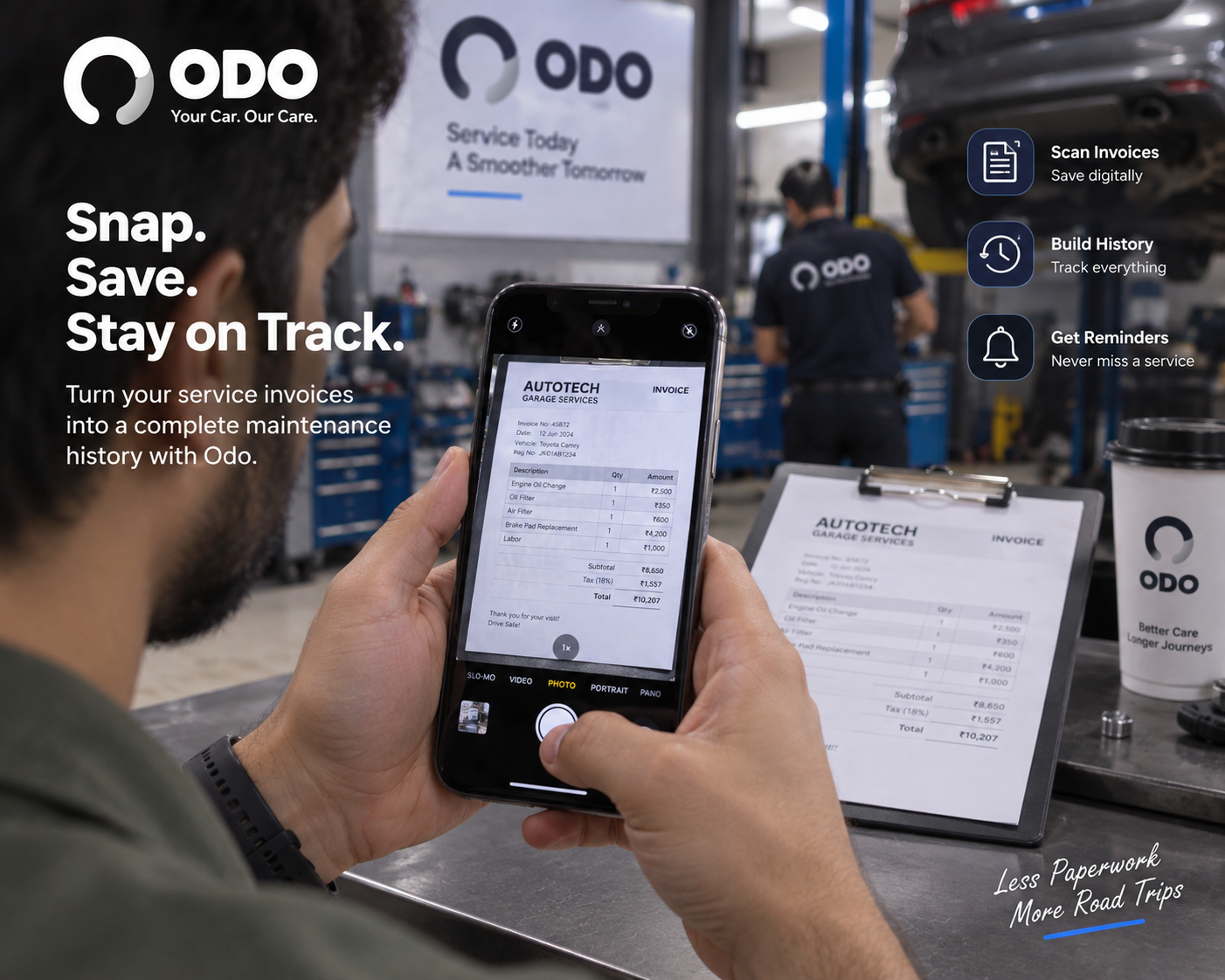
- Digitize Every Invoice: Scan physical repair bills after every garage visit to build a verifiable paper trail for your ownership period.
4. Used Car Ownership Checklist
- Audit Physical Papers: Check existing service entries, insurance policies, and PUC validity immediately.
- Perform Baseline Servicing: Replace engine oil, oil filters, and air filters if past service dates are unverified.
- Inspect Wear-and-Tear Items: Have a technician inspect brake pads, tyre tread depth, battery health, and drive belts.
- Log All Baseline Data: Store initial odometer readings, vehicle details, and document expiration dates in a digital tracker.
- Archive Future Receipts: Digitally scan and save every service invoice and parts receipt going forward.
Take Control of Your Used Car
Track service intervals, set document renewal alerts, and build a complete digital history effortlessly with Odo.
The Bottom Line
Every pre-owned car comes with a gap where its history should be, creating unnecessary owner anxiety and unexpected repair bills. While you cannot change the vehicle's past, you can take full control of its future.
Start a clean record today, and transform your used car from an unpredictable uncertainty into a well-documented, reliable asset.