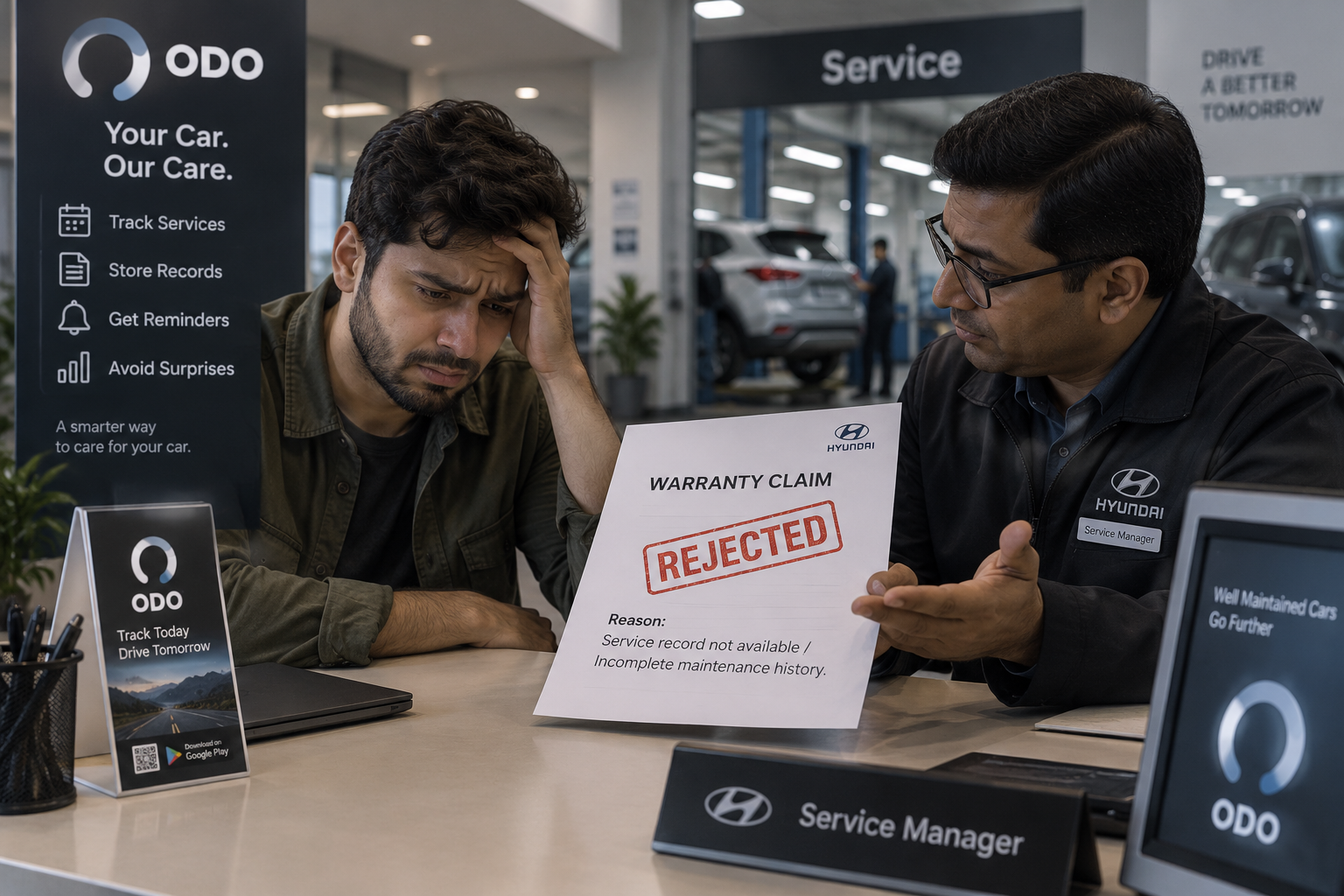
You bought a new car partly for the peace of mind a manufacturer warranty provides. Something breaks, you take it in expecting a hassle-free repair — and then you hear the words no vehicle owner wants to hear: "Sorry, this warranty claim cannot be approved."
It happens far more often than people realize, and the underlying reason is rarely what owners expect. Rejections usually aren't about the mechanical failure itself — they are about paperwork.
Here is why warranty claims get turned down, and how to ensure yours is always protected.
1. The Primary Culprit: Missing Service Records
Buried in almost every vehicle warranty contract is a specific clause: to keep coverage valid, you must service the car on schedule and provide proof of maintenance.
If you miss a scheduled service interval or lose the corresponding invoices, manufacturers have legal grounds to deny a claim. Their rationale is simple: without proof of proper upkeep, they can argue the mechanical failure resulted from owner neglect rather than a manufacturing defect.
The tragedy is that responsible owners who serviced their cars on time can still face claim rejections simply because they mislaid paper receipts. The maintenance happened, but the evidence was missing.
2. Other Common Reasons Warranty Claims Are Denied
While lost records top the list, warranty coverage is also frequently voided by these common missteps:
- Unauthorized Repair Shops or Aftermarket Parts: Certain warranties require servicing at authorized centers or using genuine original equipment manufacturer (OEM) parts. Deviating without proper documentation creates grounds for rejection.
- Delayed Service Intervals: Skipping a service or delaying a 10,000 km checkup until 18,000 km weakens your legal standing during a claim dispute.
- Unapproved Modifications: Structural, electrical, or engine ECU modifications can instantly void coverage for associated vehicle systems.
- Excluded Wear-and-Tear Items: Components like brake pads, clutch plates, wiper blades, and tyres are standard wear items not covered under mechanical breakdown warranties.
Protect Your Warranty Records
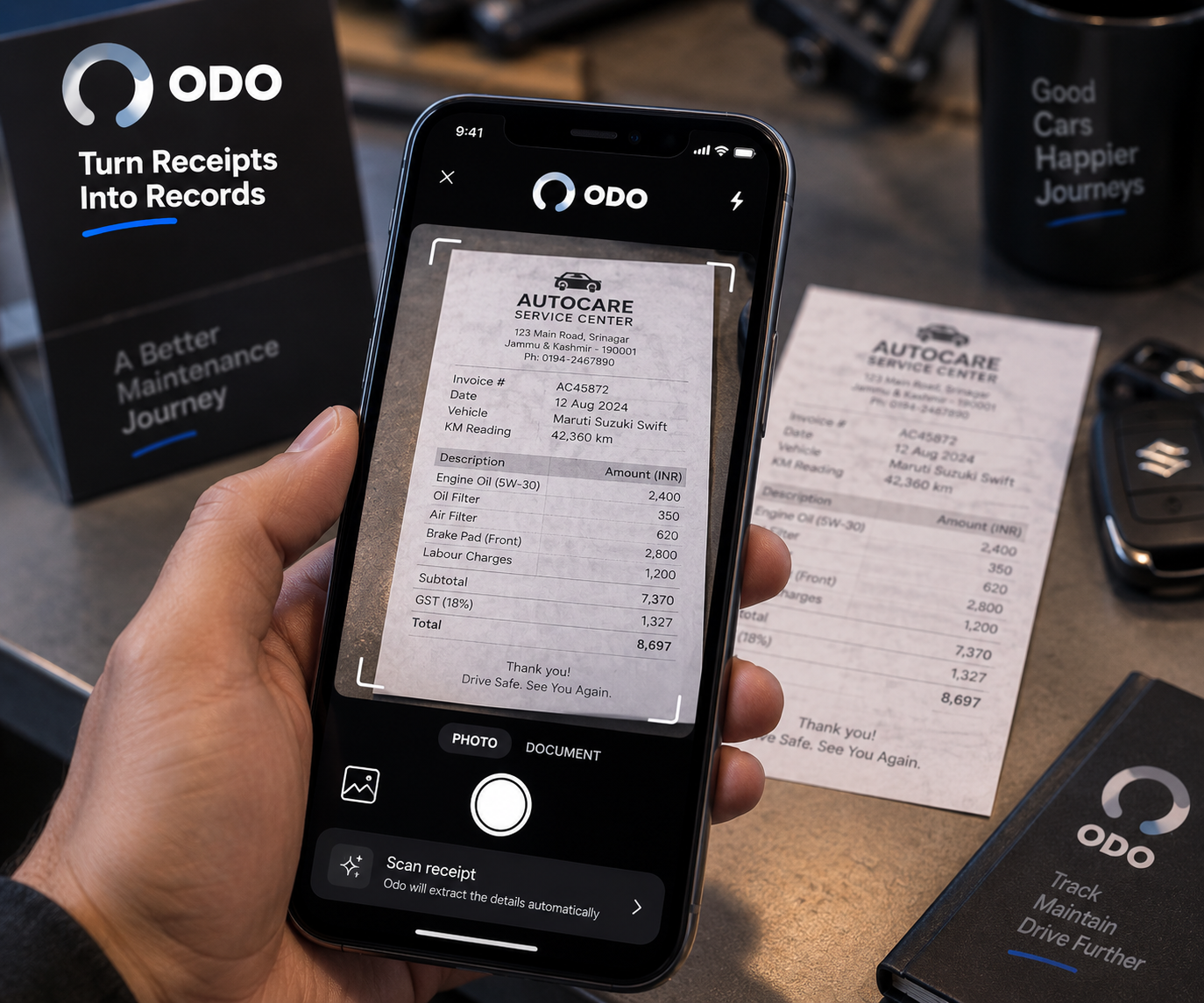
Digitize and archive all service bills, dates, and odometer logs in one secure place with Odo.
3. Why "Scattered Receipts" Fail Under Scrutiny
Many owners assume they are protected because they keep physical receipts in a glovebox, drawer, or email folder. However, disorganized receipts often fail when a claim is on the line.
To approve a high-value warranty claim, adjusters require a clear, chronological history:
- Exact service dates
- Verified odometer readings at the time of service
- Itemized list of fluids and parts replaced
- Service center credentials and official stamp
When paper bills are faded, incomplete, or missing, proving proper maintenance becomes an uphill battle.

4. How to Keep Your Warranty Valid
Protecting your vehicle warranty requires a simple, consistent routine:
- Follow the Recommended Schedule: Adhere strictly to time- or distance-based service intervals recommended in your owner's manual.
- Archive Complete Documentation: Save the itemized bill, date, odometer reading, and workshop name for every single checkup.
- Verify Warranty Terms: Review your warranty contract to understand specific requirements regarding authorized service centers and genuine parts.
- Maintain a Centralized Digital Record: Keep all invoices organized digitally so you never lose crucial proof due to misplaced paperwork.
Never Lose a Service Record
Store your vehicle's full maintenance history, document expiration dates, and scanned invoices effortlessly with Odo.

Warranty Protection Summary
- Stick to Schedules: Perform maintenance on time based on kilometres or calendar months.
- Keep Complete Invoices: Ensure receipts show date, mileage, parts used, and workshop details.
- Verify Specific Clauses: Confirm whether your policy mandates authorized workshops or OEM parts.
- Digitize Instantly: Scan paper bills immediately to prevent loss or physical degradation.
The Bottom Line
Most rejected warranty claims aren't denied because of the mechanical defect — they are rejected because the owner couldn't prove the vehicle was maintained according to manufacturer standards.
Don't let a lost receipt or forgotten date cost you a repair that should be covered. Service on time, keep an organized digital paper trail, and let your warranty protect your budget as intended.