Every car owner has asked some version of this question: "Is it time to change this yet, or am I doing it too soon?" Change a part too early and you're wasting money. Change it too late and you risk damage — or a costly breakdown.
The tricky part is that every part runs on its own schedule. Your oil, tyres, brakes, and battery all wear out at completely different rates, measured in different ways. No single date covers all of them.
Here is a simple, practical guide to how often the main parts of your car actually need changing — and how to keep track of it all without doing mental maths.
Car Maintenance Inspection and Servicing
A mechanic inspecting car engine fluids, battery, and tyres during routine service.
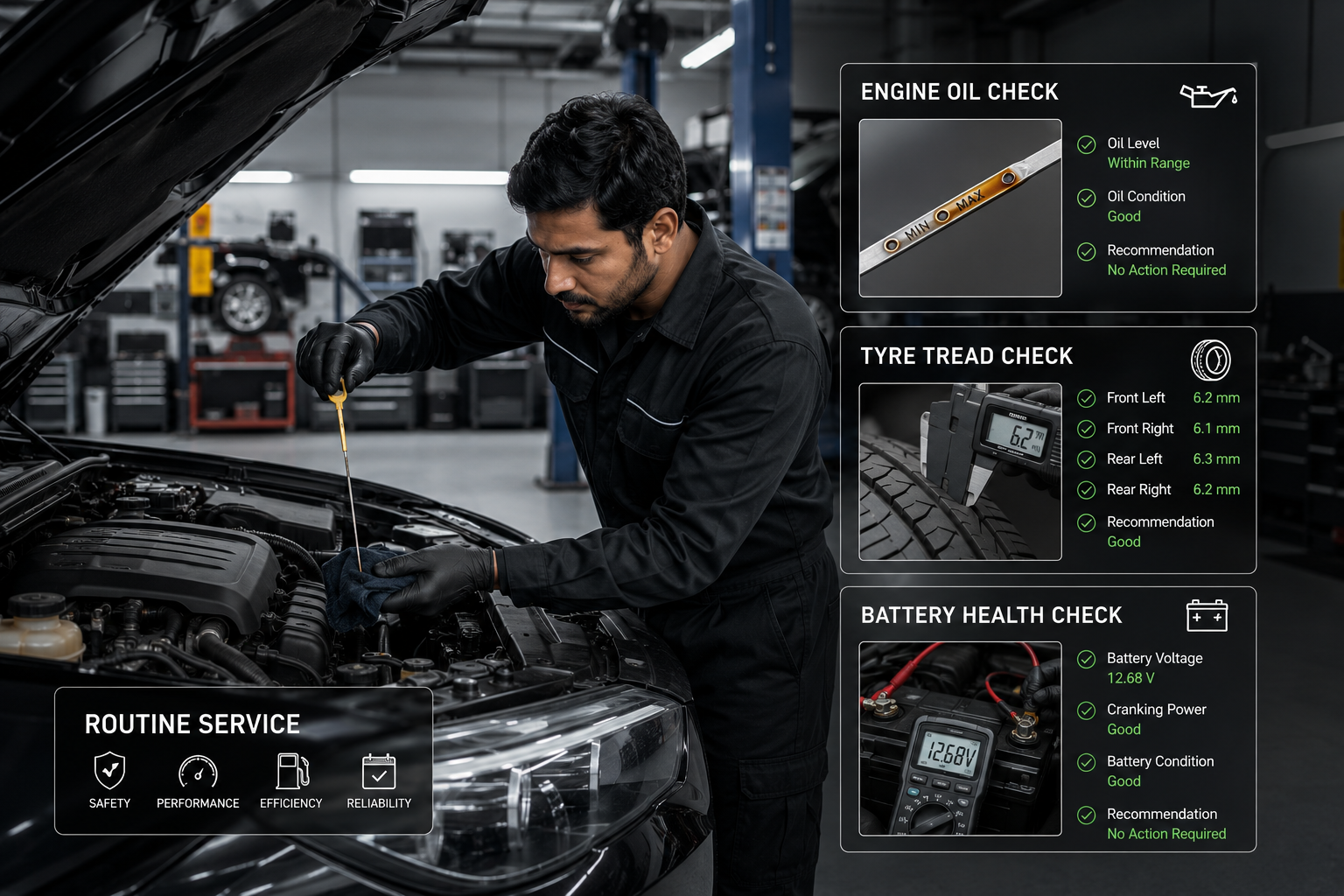
1. Engine Oil
How often: Roughly every 5,000 to 10,000 km, or once a year, depending on the oil type. Conventional oil needs changing sooner; fully synthetic oil lasts longer. Why it matters: Engine oil keeps moving parts lubricated and cool. Old, dirty oil loses its ability to protect — and a poorly lubricated engine leads to heavy damage. How to know it's due: Track the odometer reading at your last oil change. Once you've driven your car's recommended interval, it's time for a flush and refill.
2. Tyres
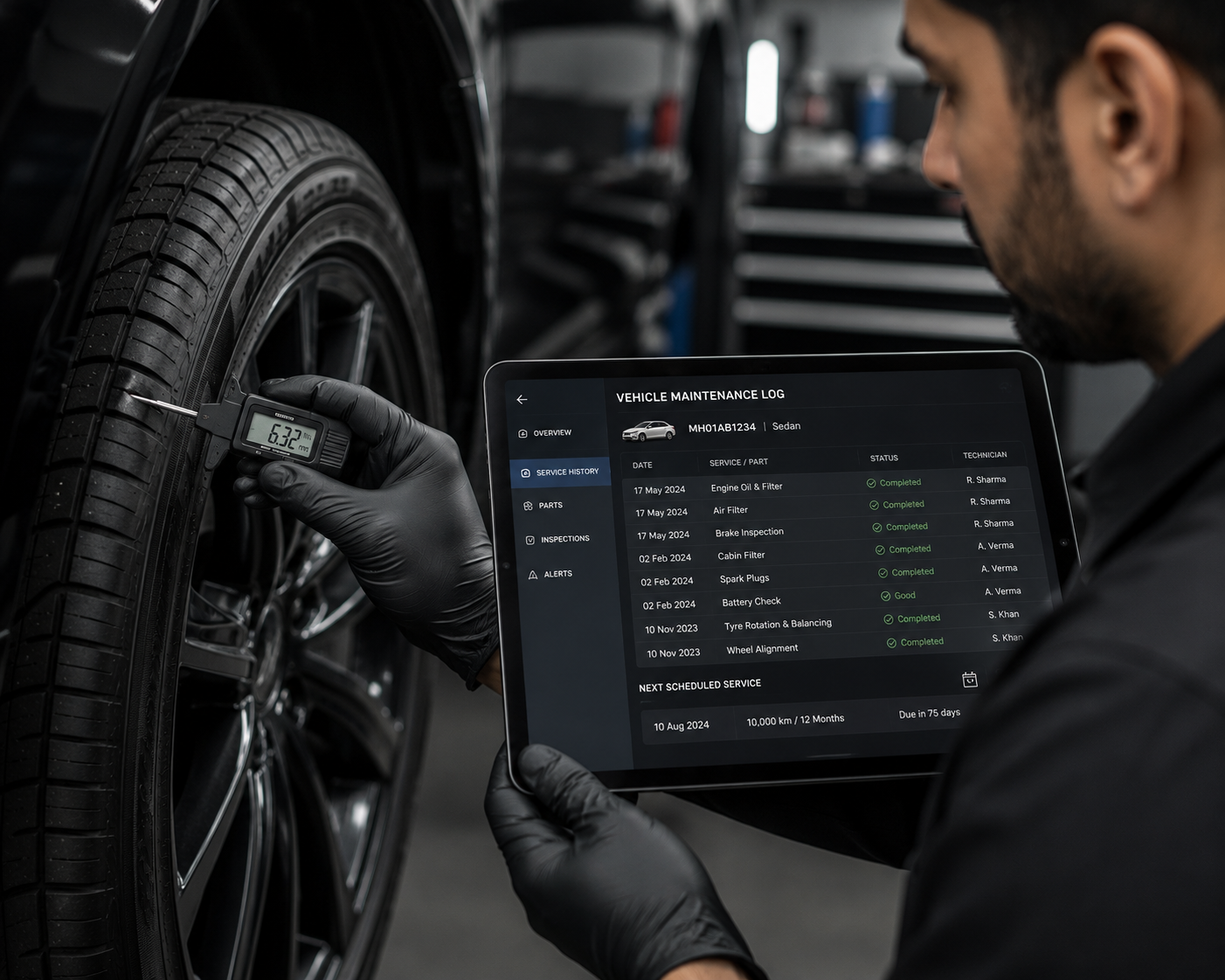
How often: Tyres are replaced based on wear and age rather than a fixed schedule. Most last 40,000 to 50,000 km, but should be replaced every 5 to 6 years regardless of distance, as rubber hardens over time. Why it matters: Tyres are your only contact with the road. Worn tyres increase braking distances and drastically reduce grip in wet conditions. How to know it's due: Check tread depth (using built-in tread wear indicators), look for sidewall cracks, and note the manufacturing date. Rotate them periodically for even wear.
Track Every Maintenance Interval
Log your oil changes, tyre rotations, and battery age in Odo. Get smart reminders based on date and odometer distance.
Checking Tyre Wear and Tread Depth
Close-up shot of checking tyre tread depth using a gauge during maintenance.
3. Brake Pads
How often: Typically every 40,000 to 50,000 km, but this varies depending on driving style. Heavy city traffic and frequent hard braking wear them out much faster than open highway cruising. Why it matters: Brakes are non-negotiable for safety. Leaving worn pads too long causes metal-on-metal contact, damaging the expensive brake discs/rotors. How to know it's due: Listen for squealing when you apply the brakes (an early warning indicator), and replace them before it turns into a metallic grinding noise.
4. Car Battery
How often: Most car batteries last 3 to 5 years. After that, they can fail with little warning — often on cold mornings or during long drives. Why it matters: A dead battery leaves you stranded. Since batteries give few early warning signs, tracking age is the best way to prevent sudden failures. How to know it's due: Note down when it was last replaced. If it has been 3+ years, or if you notice sluggish engine cranking and dimming headlights, get it tested.
5. Air Filter and Consumables
How often: The air filter is usually cleaned or replaced every 10,000 to 15,000 km. Other consumables — wiper blades, coolant, brake fluid — are handled during routine services. Why it matters: A clogged air filter restricts airflow to the engine, hurting your fuel efficiency and engine power.
Digital Car Part Replacement Tracker App
Smartphone screen displaying upcoming car maintenance tasks and service reminders in Odo.

Quick Replacement Summary
Engine Oil: Every 5,000–10,000 km (or yearly) Tyres: ~40,000–50,000 km, or every 5–6 years Brake Pads: ~40,000–50,000 km (sooner in heavy traffic) Car Battery: Every 3–5 years Air Filter: ~10,000–15,000 km
The Real Challenge Isn't the Intervals — It's Remembering Them
The intervals themselves aren't complicated. The hard part is that each part is measured differently, and they all fall due at different times. Trying to hold four or five different schedules in your head leads to two mistakes: replacing things too early "just in case" (wasting money) or too late (risking breakdown). This is where Odo helps. You log each service entry once — with its date and odometer reading — and Odo keeps track of what's due next. No mental maths, no guesswork, no forgotten intervals.
Never Guess Your Next Service
Keep your car running smoothly. Track every part's replacement schedule in one app and spend money only when you actually need to.